Palato do CôaDouro Superior · Portugal
Quinta do Palato wine cellar
Muxagata · Vila Nova de Foz Côa

Quinta do Palato.

22.7 hectares of vineyard, six partners, and a cellar that only arrived in 2012.

It all began with a wine.

In 2007, before there was a cellar of its own or a fully defined plan, Carloto Magalhães made the first wine with grapes from the estate. The wine brought friends together, sparked ambition and gave rise to a shared project.

In those first years there was no winery and no electricity: the wine was made and kept at Quinta da Canameira, next door. And the decisions were taken in a shed in Muxagata — the grilled-chicken one, table laid and chairs mismatched. That is where the future was argued out. The estate’s own winery came only in 2012.

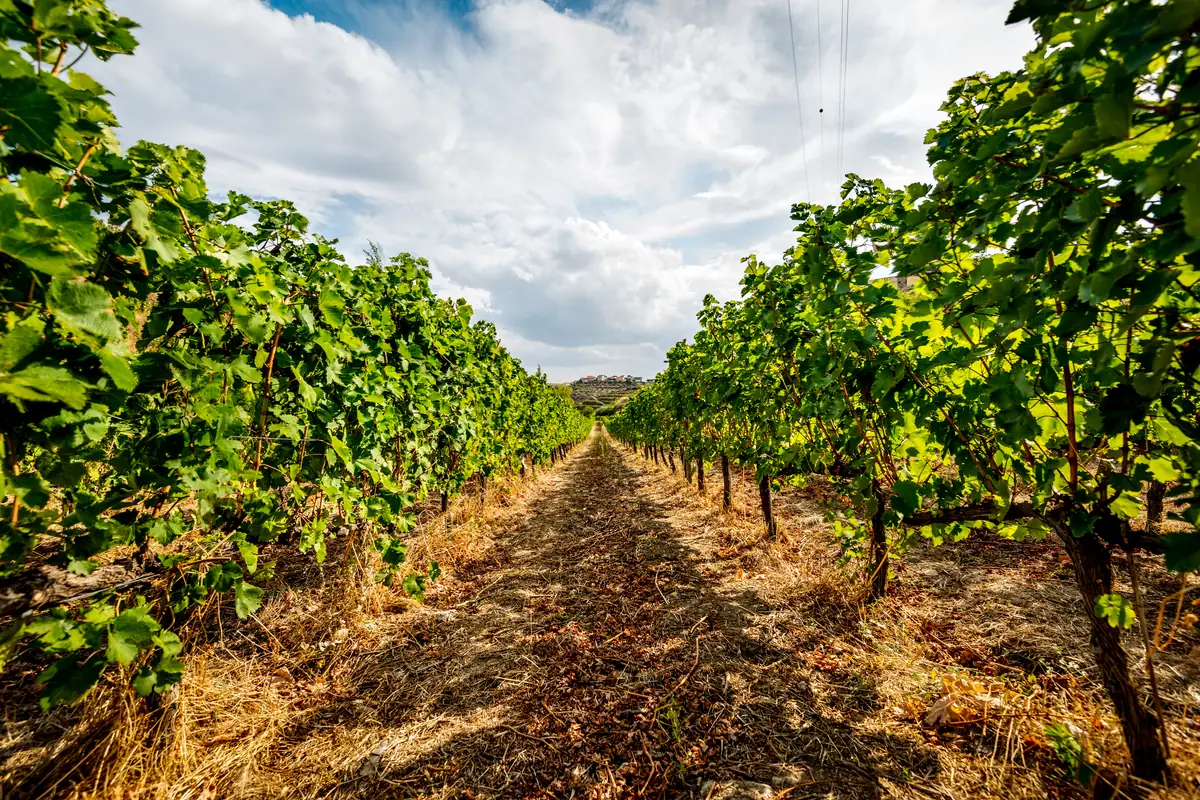
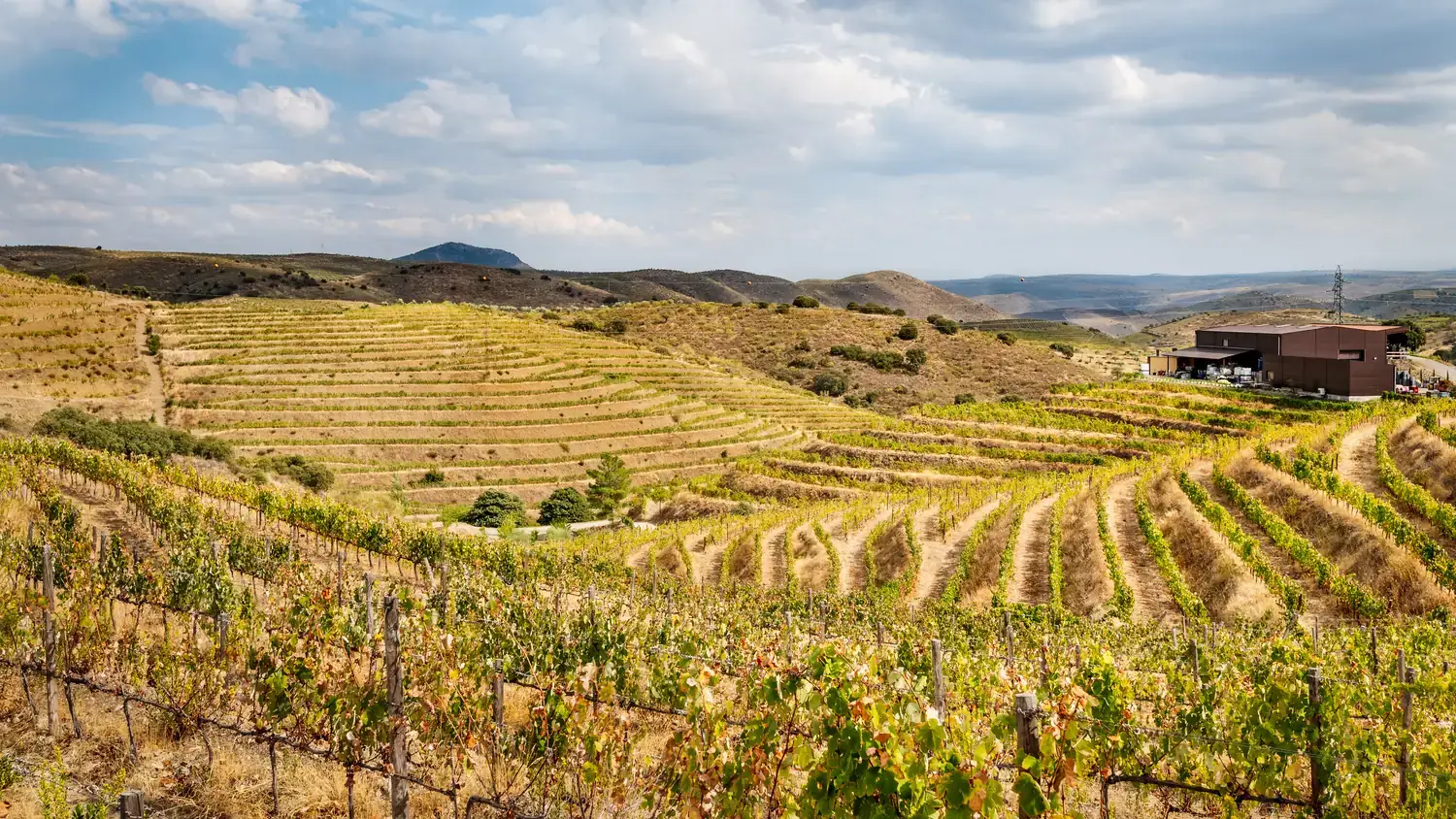
The estate is called Quinta da Saudade and it sits in Muxagata: an amphitheatre facing the sun, with every aspect. Vineyard takes 22.7 of the 38 hectares — the rest is olive grove, almond trees, pasture and the reservoir. Planted, it comes to 20.9 hectares, and four of them are old vines.

How we make it →Douro Superior →
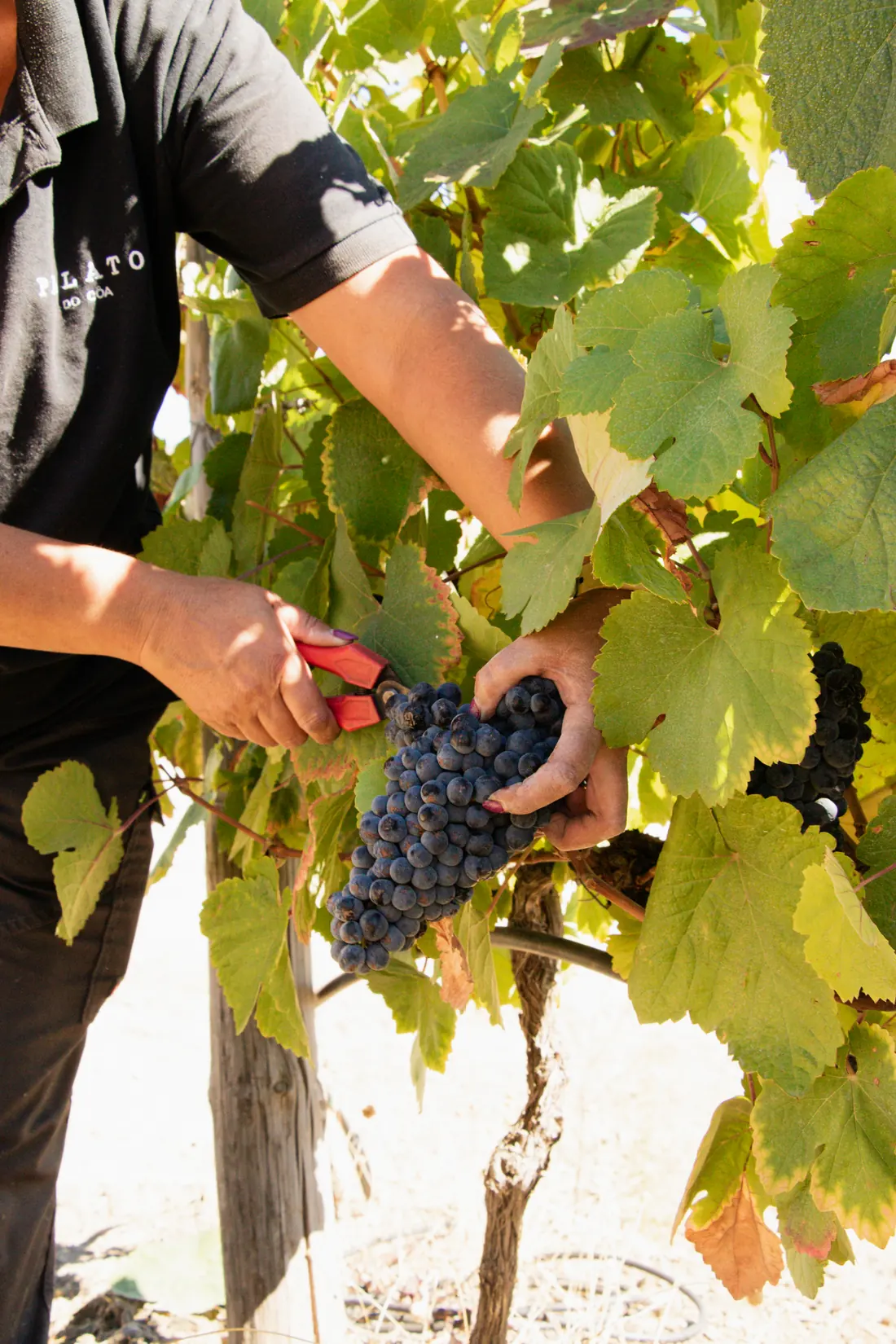
Two pickers working a row, a crate of red grapes between them
An old vine trunk in the foreground, the vineyard climbing the slope behind

The vineyard grew slowly, plot by plot.

In 2008, at the start, there were 9.2 hectares. The other vines came later, planted plot by plot at different altitudes and aspects: Vinha do Anacoreta, three hectares of Códega, Alicante and Touriga Franca; Vinha do Piloto, in 2014, adding another hectare and a half; and Canada da Moura, in 2022, where the Arinto and the Rabigato went in.

The whites live down by the stream, where the air is cooler: they are the last to catch the morning sun and the first into shade in the afternoon. That delay, and that shade, are what keep their acidity.

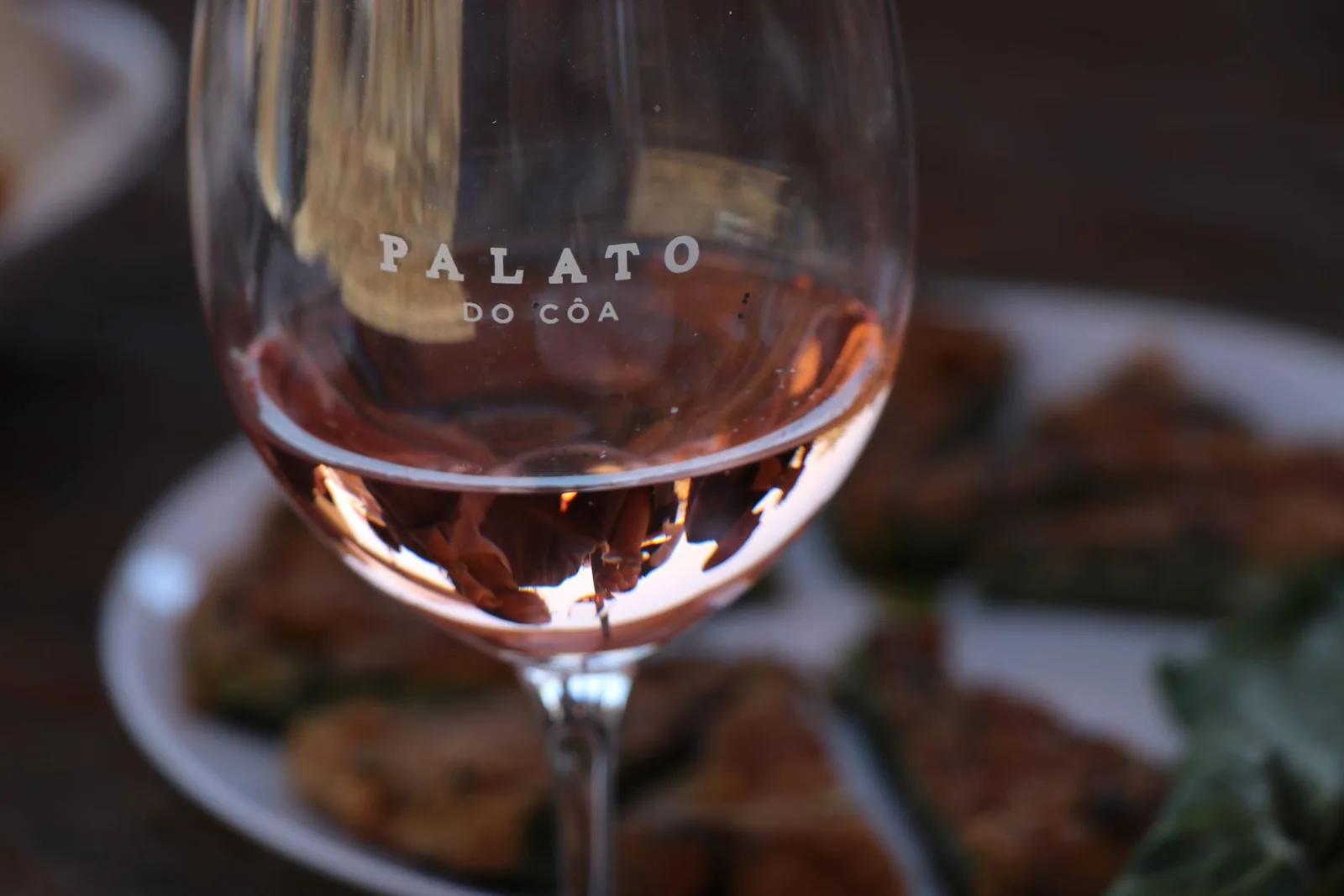
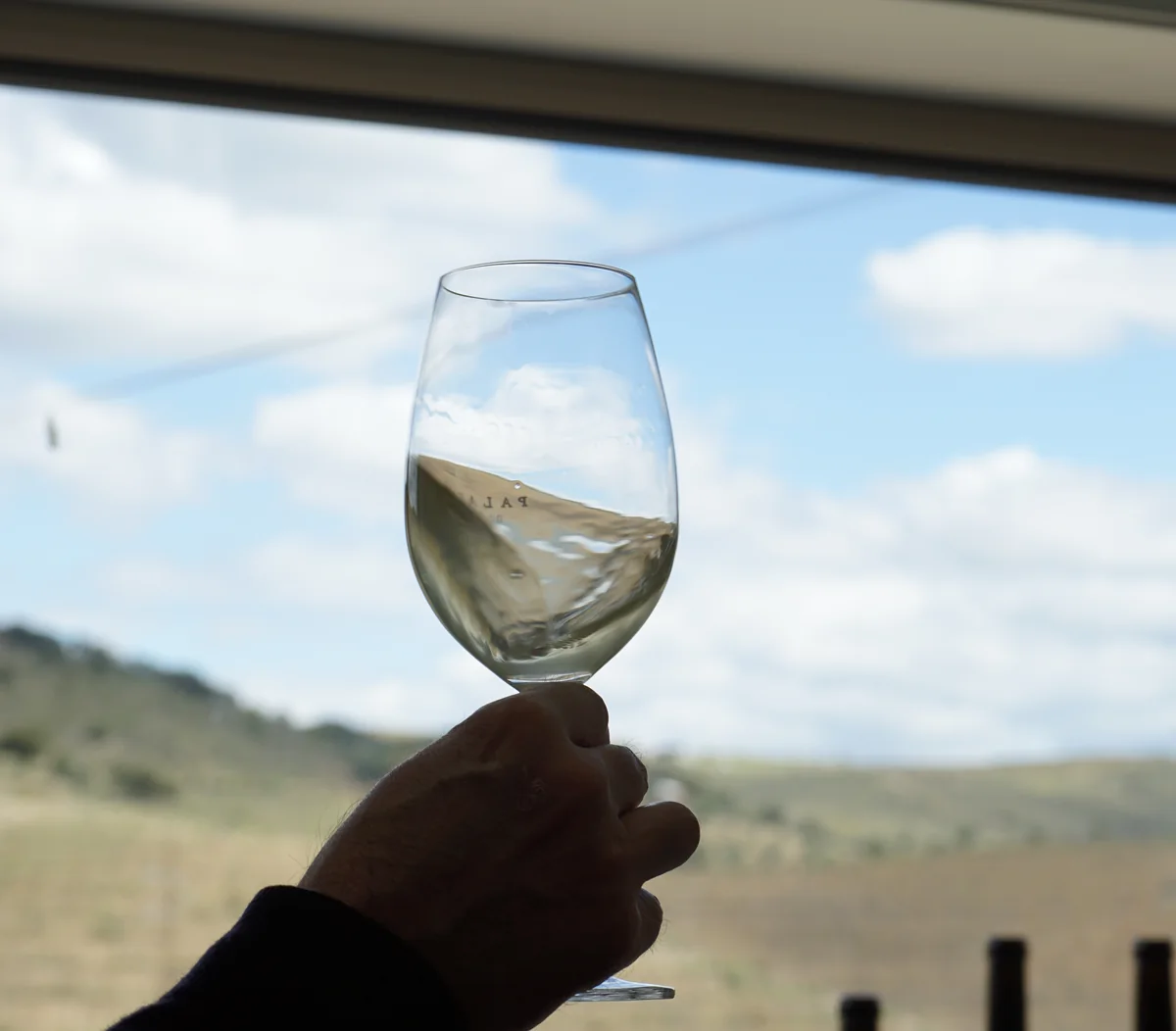
The Palato do Côa lettering etched on the glass

Giving the wine a name.

The name Palato came up as a temporary solution and ended up staying. The first label was created by Mariana Castro Lemos and was born with two strong «P»s, the origin of the brand’s first visual identity.

Later the symbols linked to the partners’ sports — sailing, tennis, golf, billiards and cycling — entered the graphic language of the labels. And on the Vinhas do Côa label are the engravings of the valley: the horses, the aurochs and the goats that palaeolithic hands left on the schist.

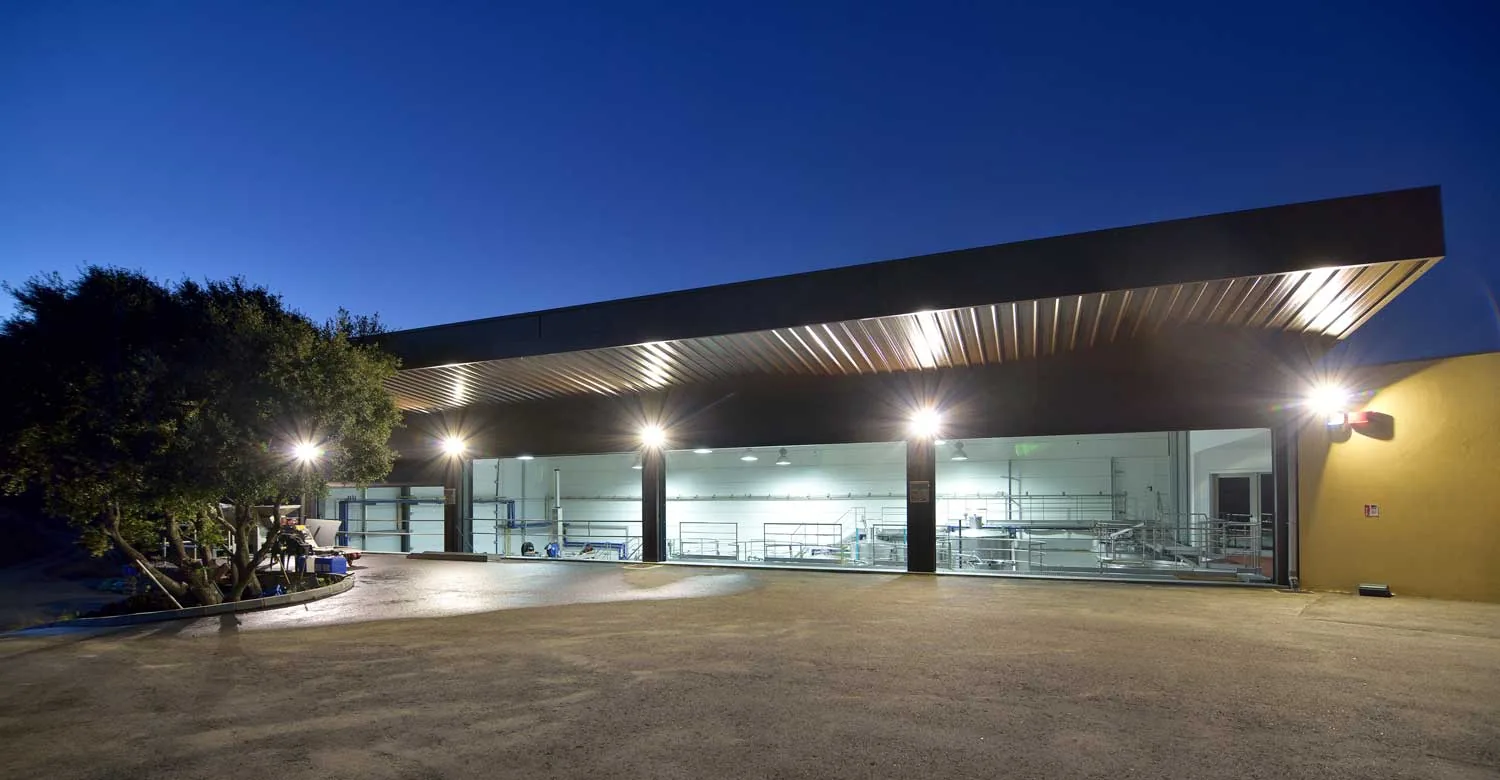
The Quinta do Palato cellar at dusk

A cellar built to follow every wine.

Built in 2012, the cellar brought the wine to the heart of the Quinta. Temperature-controlled vats, a barrel room with controlled temperature and humidity, and monitoring technology allow precise work without losing the human touch.

French oak gives more elegant notes; American oak gives vanilla and caramel. The barrel room is held between 75 and 80 % humidity: if the air dries out, the water in the wine crosses the pores of the wood, the alcohol concentrates and the barrels need frequent topping up, with a real risk of contamination.

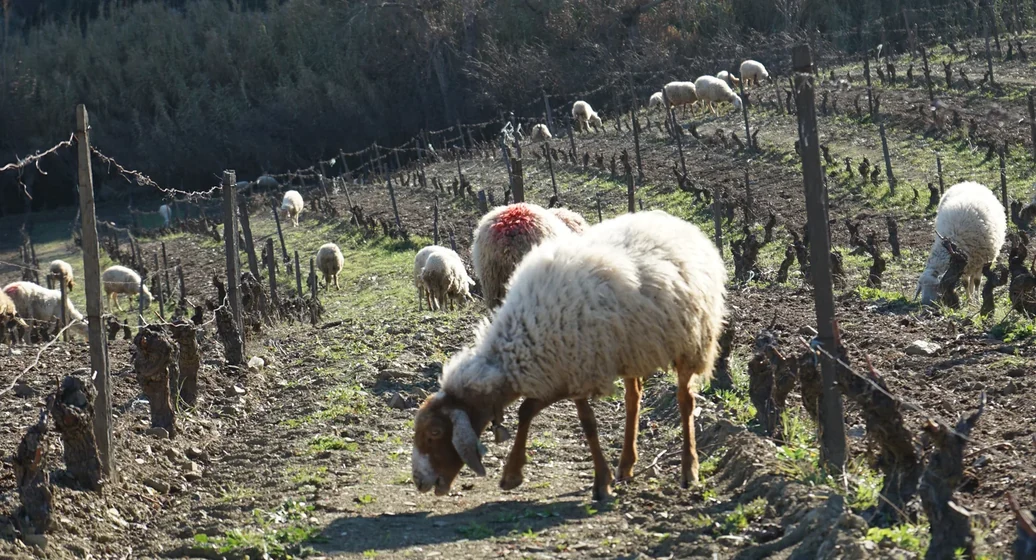
Sheep grazing between the bare vines, in the dormant season

Caring for the land is preparing the next harvest.

The Quinta’s management combines traditional practices with technical monitoring: cover crops protect the soil between the rows. And the vineyard is not weeded — the sheep weed it, moving in through the dormant season and eating what grew between the vines.

The reservoir, built in 2025, is the largest in Muxagata. It serves the vines through the most demanding stretches and waters the animals. It was not a luxury: it was an answer to summers that run dry earlier than they used to.

And there is one line that is never crossed: every grape comes from the estate, none is ever bought. That is what keeps production normally between one hundred and one hundred and thirty thousand bottles a year — what the vineyard gives, and no more.

Who makes the wine

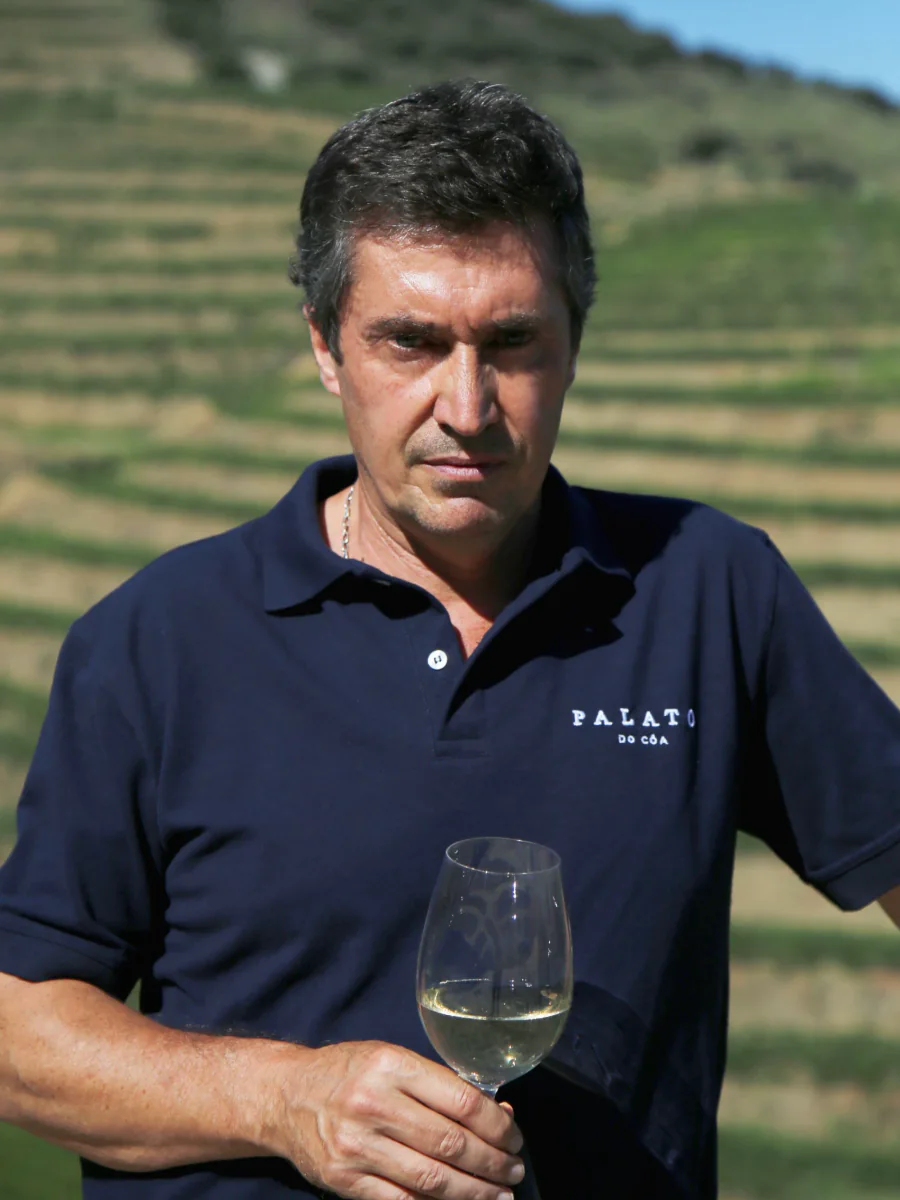
Carloto Magalhães in front of the Quinta do Palato vineyards

Carloto Magalhães

Winemaker

Carlos Magalhães, better known in the trade as Carloto, holds a degree in Agricultural Engineering from the University of Trás-os-Montes e Alto Douro, taken in 1992. That same year he began working as a viticulture and oenology consultant, and has since advised producers in six Portuguese regions, from Trás-os-Montes to the Alentejo. He has taught viticulture and oenology. He made the estate’s first wine in 2007, and the proposal that started the project was his. He follows the vineyard, sets the winemaking direction and answers for the identity of each range.

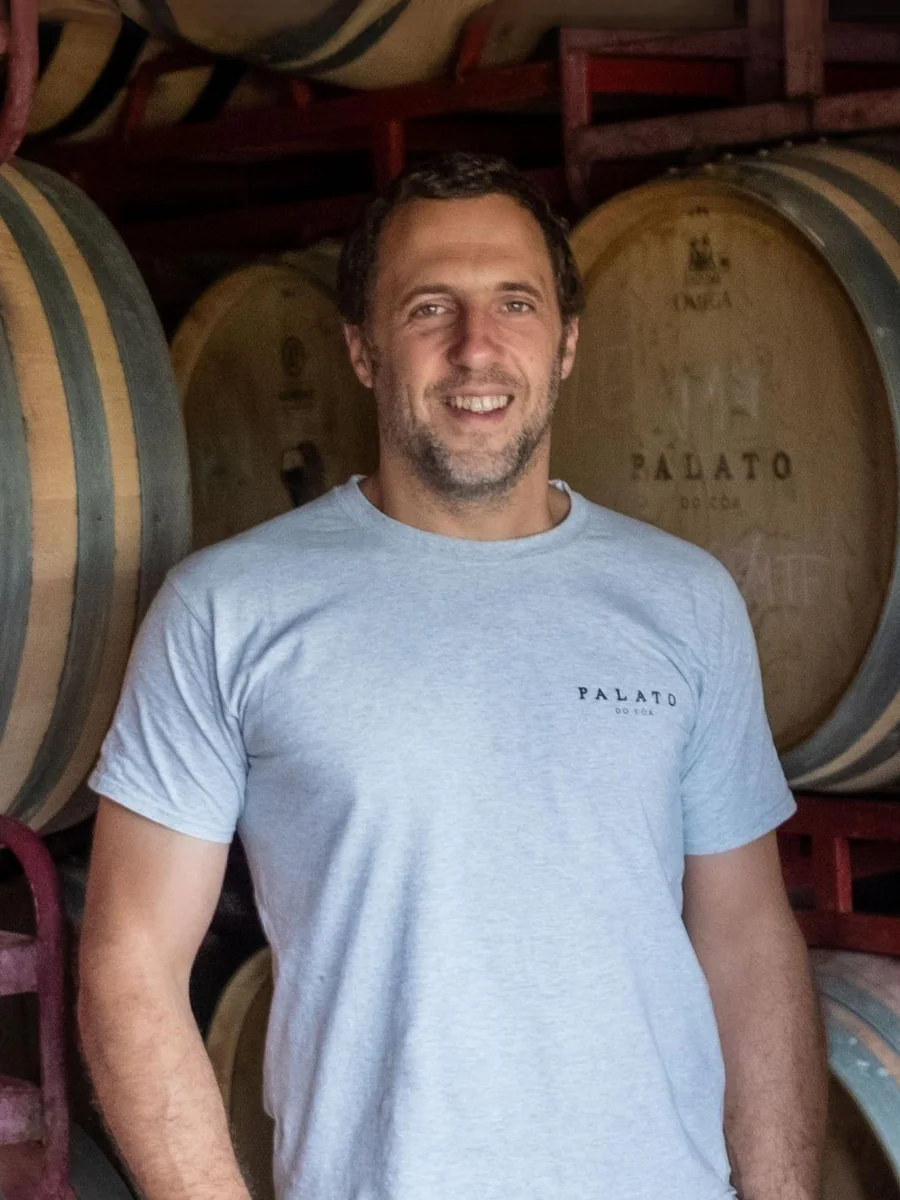
Paulo Schreck among the barrels in the Palato do Côa cellar

Paulo Schreck

Winemaker

He was a student of Carloto Magalhães in 1995, at the Santo Tirso agricultural school. In 2001 he went to France, to Sauternes, where he trained in oenology and worked four harvests. Back in Portugal, he joined the oenology team at Quinta do Carmo, in the Alentejo, and later worked for wine companies in Porto. Since 2017 he has worked exclusively for Palato do Côa: he coordinates viticulture and oenology with Carloto Magalhães and looks after the commercial side, in Portugal and abroad.

The people

And there is one variety that appears on no label at all.

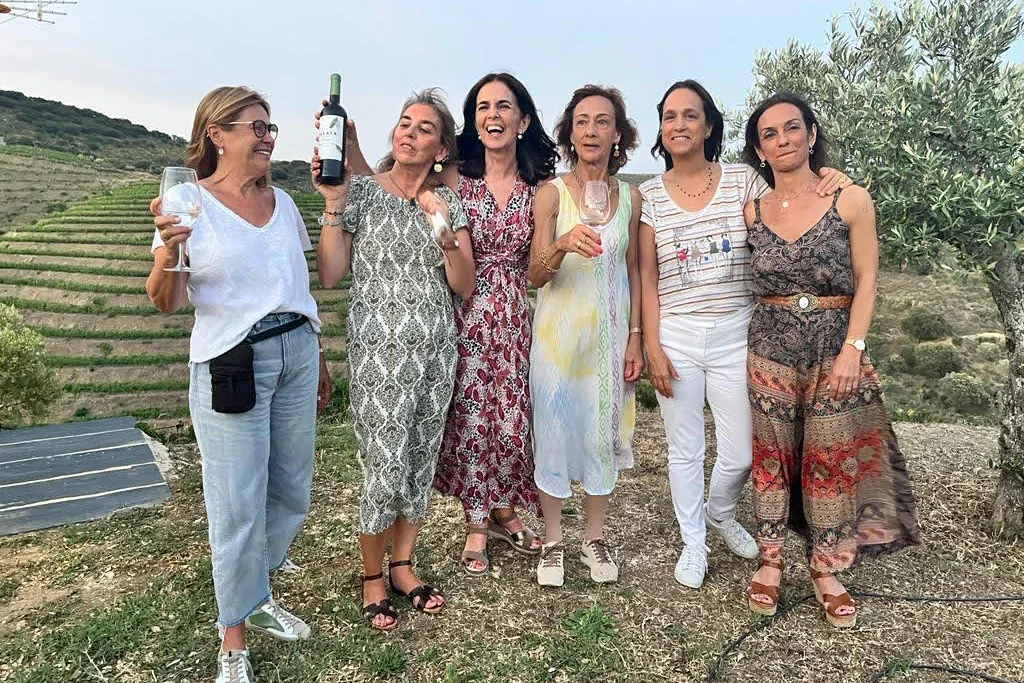
The Palatinhas — Lilian, Luísa, Migalha, Susana, Teresinha and Xana. They never attend the meetings, they join the dinners without ceremony, and they know exactly when a bottle should, or should not, be opened. They rule in silence.

The six Palatinhas — Lilian, Luísa, Migalha, Susana, Teresinha and Xana — together in front of the vineyard
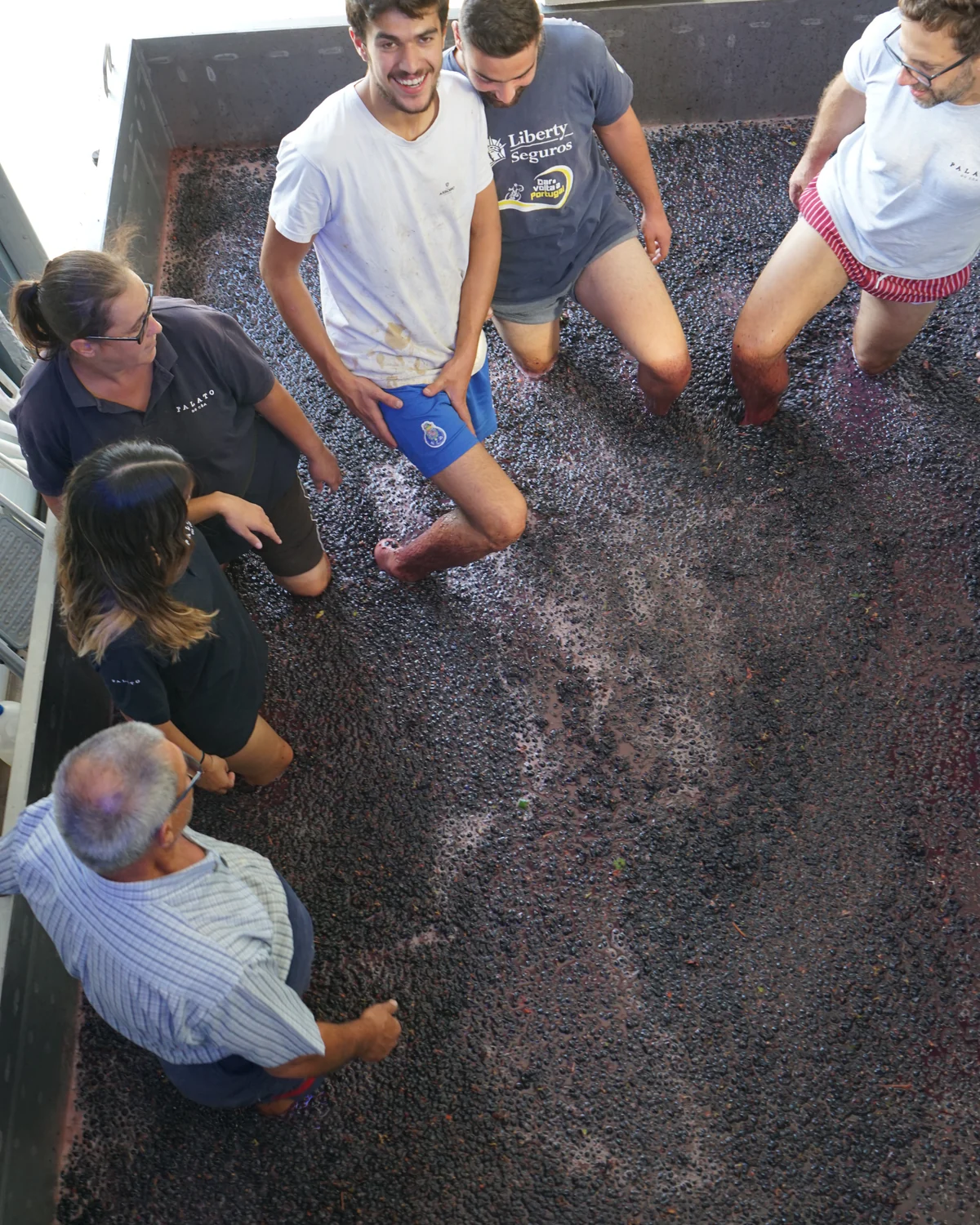
Foot treading, legs stained by the must
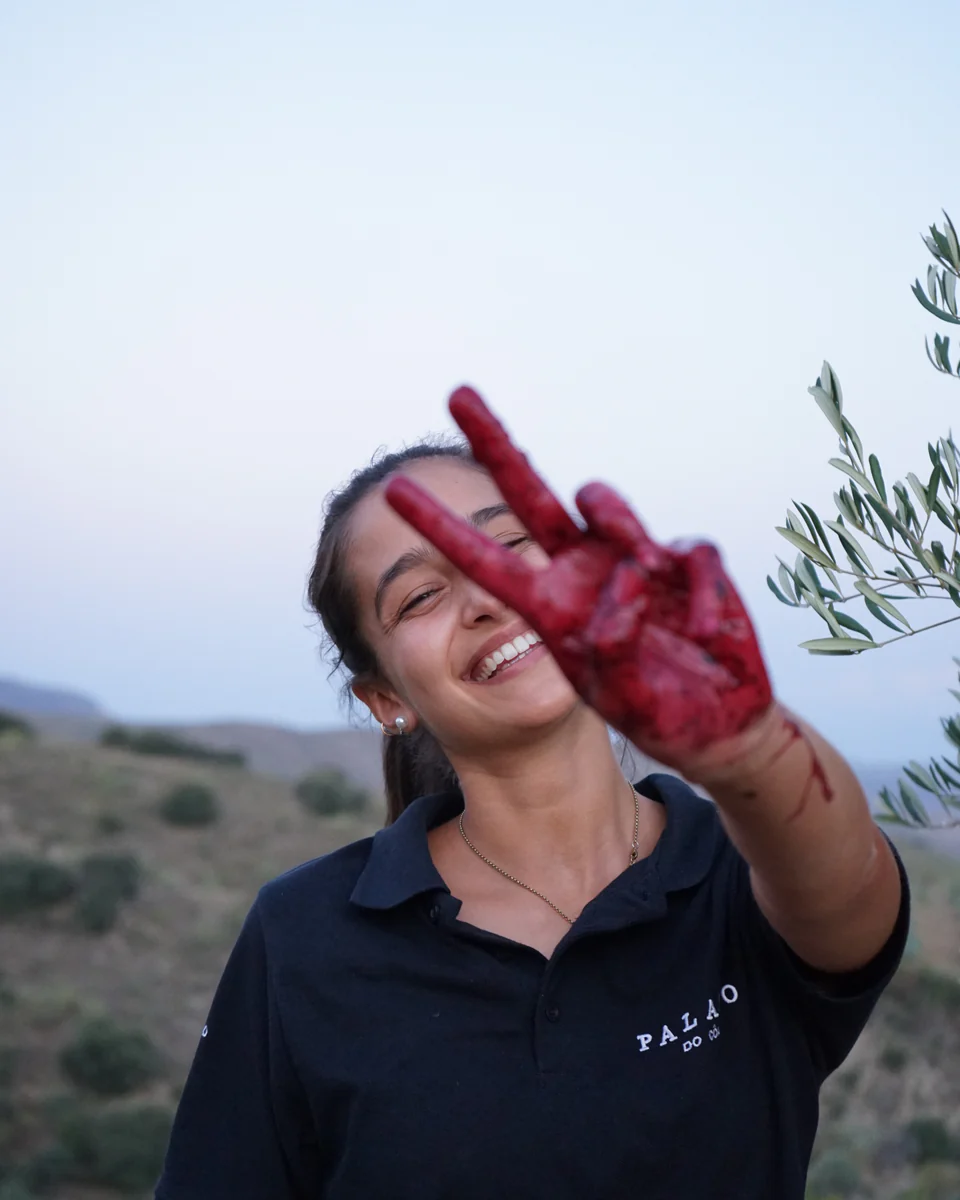
A hand stained by must, raised after treading
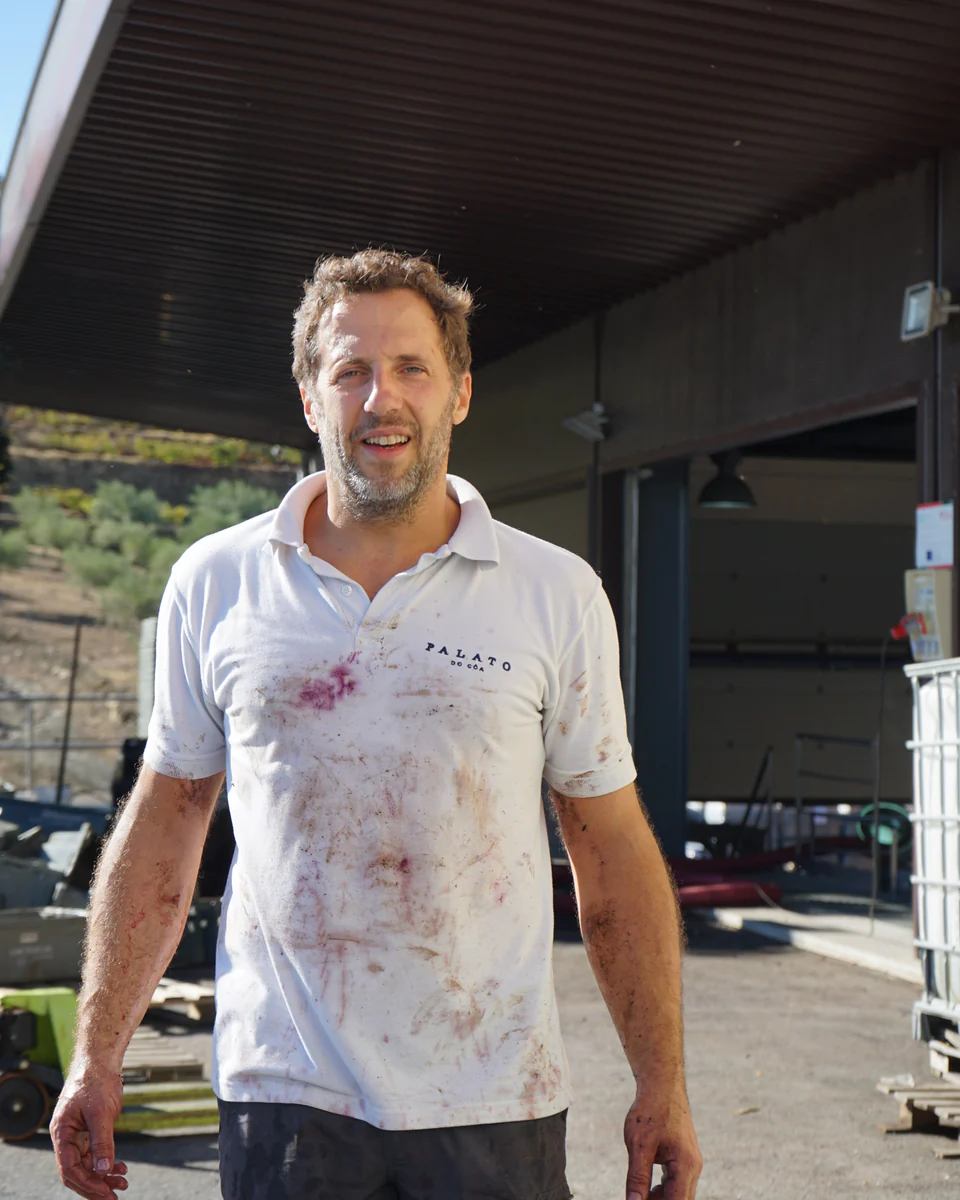
Shirt and arms stained by the work of harvest

A year at the Estate

Primavera — rosas no topo das fiadas
Vindima — o corte do cacho, à mão
Vindima — receção das uvas na adega
Lagar — pisa a pé
Estágio — corredor de barricas
Prova — o desenho do lote

It was never only about bottles.

The table came before the winery: it started in a shed in Muxagata, with mismatched chairs. Today the tasting room has one wall fewer — it was opened so the vineyard could come in — and there are still people who decide, without ceremony, when a bottle should or should not be opened.

Lunch under the parasols, overlooking the vines
In short

Ten facts.

The estate in ten lines, without a single adjective — every number can be checked in the vineyard, in the cellar or on the technical sheet.

Read the ten facts
Enjoy · Wine tourism

Book a visit

The Quinta welcomes guided visits and tastings by appointment. Tell us when you’d like to come and we’ll confirm availability and details.

Visits are subject to confirmation.

The request is sent by email to geral@palatodocoa.pt. Visits are subject to confirmation. By sending it you agree that your data is used solely to answer this booking request — see the Privacy Policy.

Quinta do Palato | Muxagata, Douro Superior